
Algemeen Bike fitting in winter versus after three weeks of the Giro d’Italia, and why they’re not the same
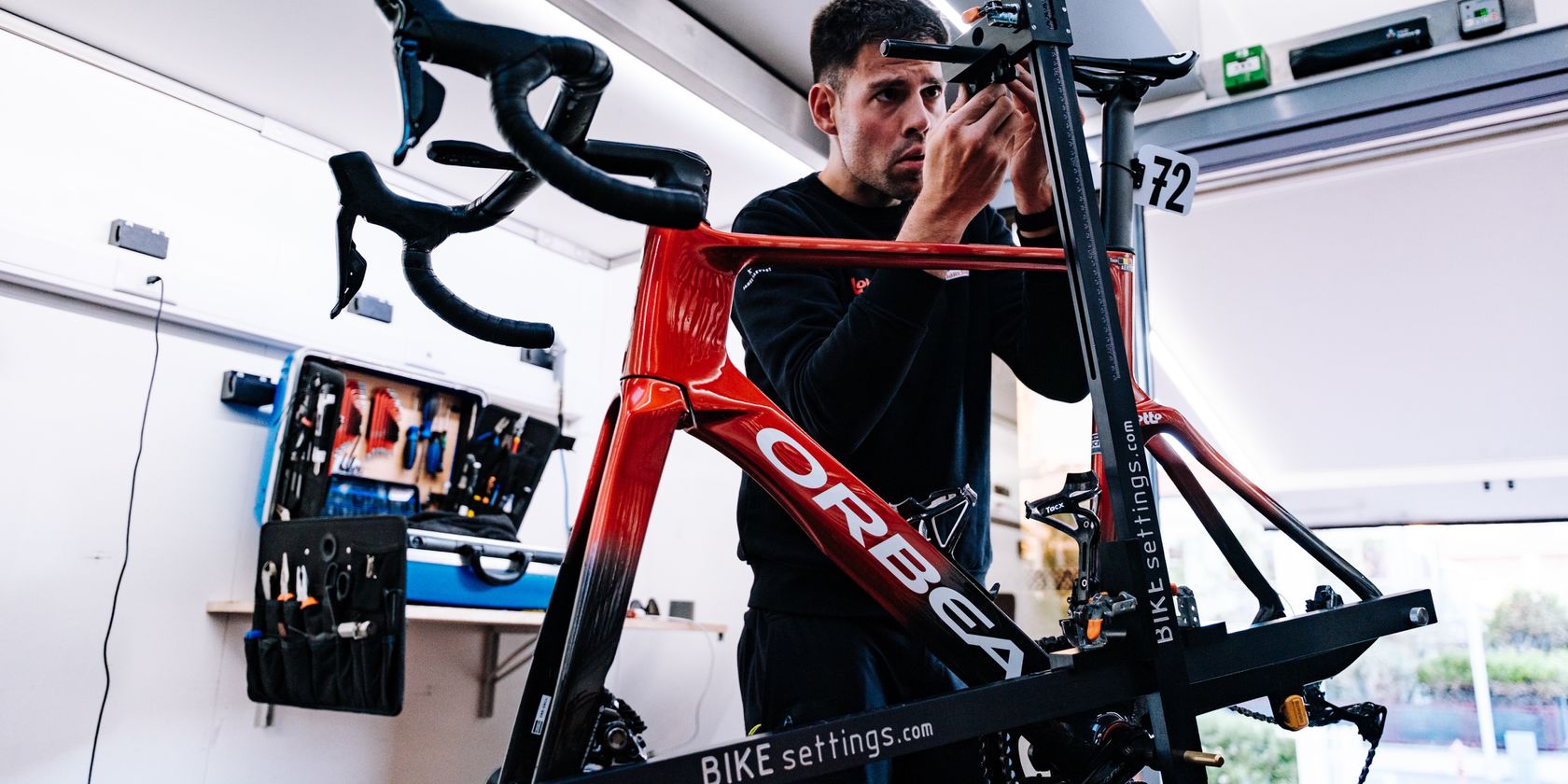
Last winter, during the Lotto–Intermarché team camp, the riders passed one by one through Bikefit Van Staeyen, Lotto–Intermarché’s bike fitting partner: riders for whom the team’s Orbea bike was brand new, but also riders who are already familiar with our Basque bike partner. Indoors, the riding position of our riders is measured down to perfection. But that does not automatically translate into comfort and performance after five or six hours in the saddle- let alone after three weeks of the Giro d’Italia. “Fatigue changes the body,” explain Kevin and Michael Van Staeyen. “A rider coming in for a bike fit in November or December is not the same rider sitting in week three of the Giro. Muscles react differently, compensations start to creep in. That’s when issues can surface that you simply cannot detect during a bike fit that lasts around three hours.”
Using the thermal technology available to them, Van Staeyen tries to translate theory into practice as accurately as possible. “With technology- especially thermal cameras- we can map asymmetries very well. We can see where a rider is excessively compensating or overloading the body. That allows us to predict what could potentially become a problem during longer rides. Besides thermal imaging, we also have many other technologies at our disposal that enable us to detect issues in advance. We then compare the data with information gathered after two months of riding. In more than 95 percent of cases, our predictions match reality. So we’re very close to the mark.”
“It’s logical that every rider has different needs. A climber sits differently on the bike than a sprinter; Jarno Widar rides differently from Arnaud De Lie, that goes without saying. In theory, you could adjust a position depending on the course profile, but obviously that doesn’t happen. Riders have one riding position they are most familiar with. We both spent years as cyclists ourselves. That helps us listen carefully to riders and understand what they need.”
No matter how correct a bike fit may look on paper, a riding position is always subject to countless factors. “No laboratory setup can perfectly simulate what happens after days of racing stress. The human body is dynamic and constantly changes under the influence of fatigue, stress, weather conditions, terrain, or mental strain. Every bike fit is a challenge.”
Picture: Cyclingmedia_agency
